
By Ava Burchell, Staff Writer
Many Gettysburg College students have some knowledge about the Office of Multicultural Engagement (OME) and the Gender and Sexuality Resource Center (GSRC). However, they may not know all that these offices can provide.
Located on the south side of campus across from Brua Hall, OME houses a study space and a classroom that host a variety of programs to expose students to different cultures and to empower them to share their own diverse backgrounds.
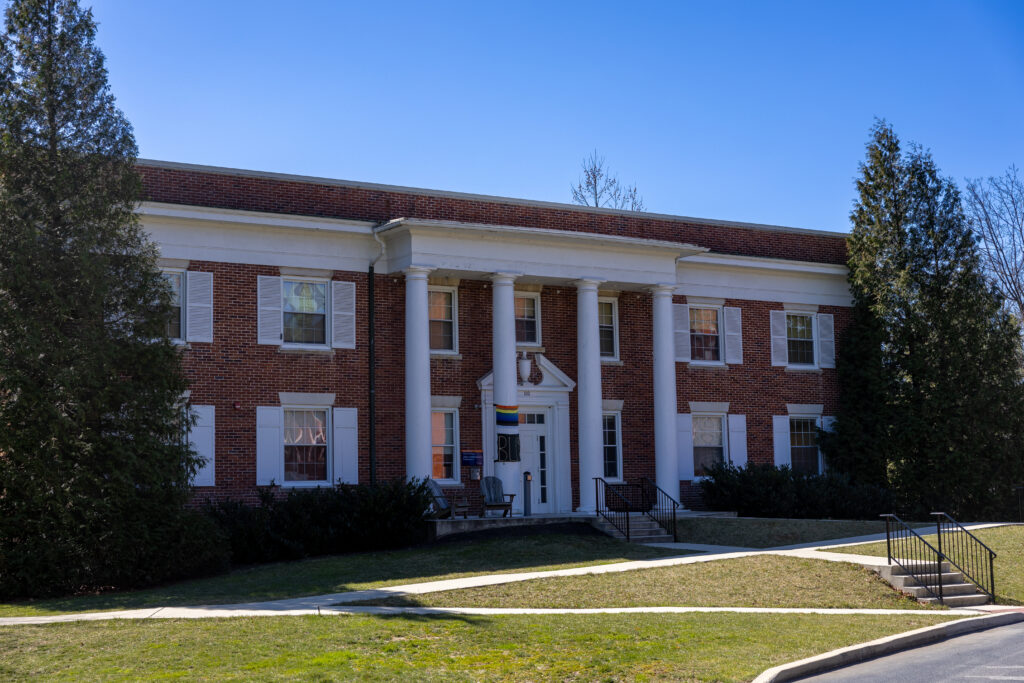
The Office of Multicultural Engagement (Photo Eric Lippe/The Gettysburgian)
OME has an array of materials to provide an equitable experience for all students.
The Mosaic Cupboard carries personal care products and other necessities that are available to students free of charge. Any student looking to utilize the Mosaic Cupboard may request items through an online form and pick them up at the OME front desk when the office is open. In addition, OME maintains Mosaic Minds, a program that lends textbooks to students for free. Students can request textbooks using an online form located on the OME website alongside the Mosaic Cupboard form.
“While we won’t have every book, it’s a great resource to alleviate the financial strain of expensive books,” said OME Assistant Director Mauricio Novoa.
In addition, OME offers two scholarships to students: the Bryant Fund and the Myra T. Herron Memorial Fund. The Bryant Fund is available to first-generation college students pursuing internship opportunities. Students must register their internship through the Student Center in order to qualify.
“The Bryant Fund is [funded] through the Career Engagement Center for first-generation students who have summer internships and need additional aid to be able to work. This fund is intended to help alleviate barriers that tend to affect first-generation students when looking for internships, so they can access the same experiences as their peers,” said Novoa.
The Myra T. Herron Memorial Fund provides underrepresented students with funding for their ventures outside of the classroom. It was created in honor of Herron, who was the first African American woman to graduate from Gettysburg College.
“The Myra T. Herron Fund is funding for underrepresented students on campus to be able to participate in extracurricular activities. Students have used the fund for everything from immersion trips to Greek life dues to summer programming, so there are a lot of possibilities with the fund,” said Novoa.
In addition to these resources, Novoa said OME is planning to reinstate its peer mentorship program, although the details have not yet been finalized. OME works hard to ensure that students are aware of the programs and resources that it provides.
“We market in various ways to reach as many students as possible, including posting on the digest, sharing on the OME’s social media accounts, our ‘What’s Going On?’ newsletter, email blasts to various alias’, and our web page,” said Novoa. “We will also share posters on the CUB TVs and share them with other offices and departments to reach out to their students, but we try and use every avenue to get the information out.”
While there have been recent changes to the OME’s administration, their mission remains the same, and the office hopes to better serve students.
“We take into account student needs and availability of the resources we have to provide programming and support, and more people in the office means more opportunity to assess these factors,” said Novoa.
The GSRC is another office that provides resources and support for students. Located behind the main doors of Apple Hall, the GSRC is intended to be an area for all students, faculty, and staff. It is open every day that class is in session from 12 p.m. to 9 p.m.
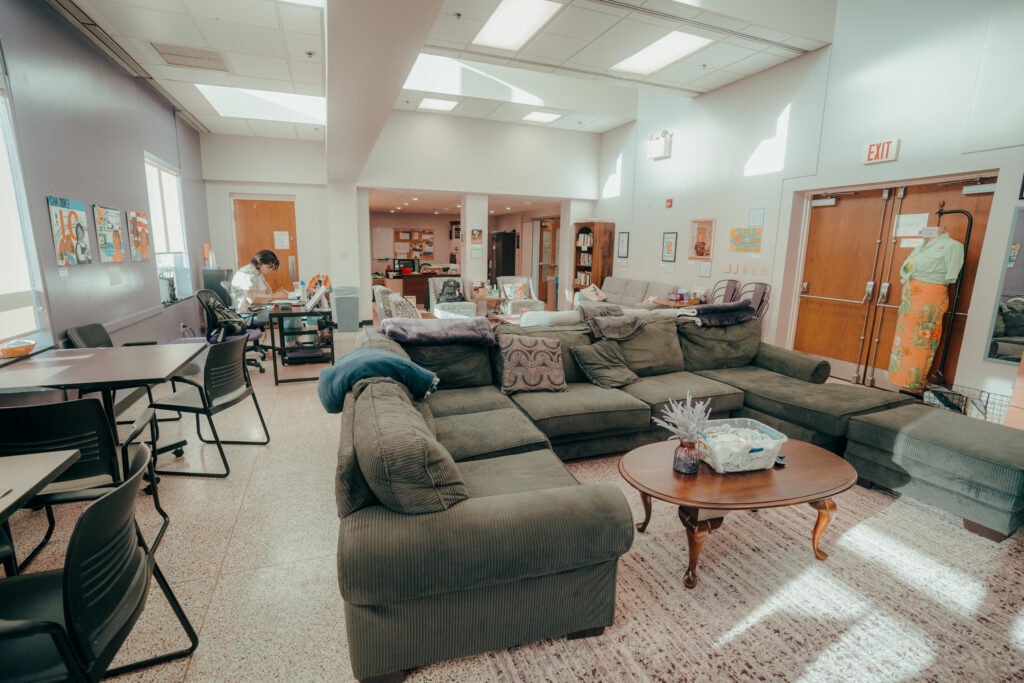
The Gender and Sexuality Resource Center in Apple Hall (Photo Borna Ganji/The Gettysburgian)
“Our space includes our office, library, comfortable hang-out space, a TV with a GSRC Netflix account, study area, and full kitchen,” said GSRC director Amanda Del Gaudio.
The GSRC offers a calm place to relax with a Keurig for warm drinks. They also have books to borrow, identity and pronoun pins, and organic pads and tampons free of charge. These resources can be found both in the office and at the GSRC’s CUB tabling events. In addition, the GSRC has no shortage of programs for both students and faculty.
“We currently facilitate four peer-led discussion/affinity groups. LGBTQ+ Discussion Group, LGBTQ+ Student of Color Meet-Up Group, and Trans and Non-Binary Peer Support Group all meet weekly in the GSRC. LGBTQ+ Faculty/Staff Affinity Group meets monthly in a variety of locations,” said Del Gaudio.
GSRC student worker Brooke Ashfield ’23 expanded on the support groups that are offered to students.
“Students always seem [to] love our events centered around celebrating and affirming identities on campus. Our support groups also do very well,” Ashfield said. “These events are meant to create a sense of community, one that is safe, comfortable, and open so that every student can be themselves, unapologetically.”
Upon request, they provide additional workshops, consultations and training sessions to discuss the inclusion of all genders and sexualities on campus.
“Through our programming all over campus and within the Resource Center, we create learning spaces to promote growth and progress through ongoing dialogue about identity,” said Del Gaudio. “Through this learning, we pose the challenge of reflecting internally to understand each individual’s unique identity-based advantages and disadvantages in society, as well as actively listening to the experiences of others around us.”
One helpful resource located in the GSRC is Hera’s Closet, originally created by Hera Molina ’22. Students can pick up gender-affirming clothes for free with no questions asked. Students may also donate clean, gently used clothes, excluding underwear, to Hera’s Closet when the GSRC is open. They can also give back to the GSRC by donating to their gift fund, which is used for emergencies and other needs for LGBTQ+ students.
The GSRC has an abundance of sexual health-related resources, including pregnancy tests. Del Gaudio said the GSRC is developing a brochure that lists where to find sexual health-related resources such as birth control and Plan B.
Ashfield shared her perspective on the office and their available resources.
“The GSRC works on affirming, expressing, and celebrating gender and sexuality within the campus community and creating safe spaces for students to feel comfortable and confident in their identities,” Ashfield said. “We do our best to provide educational materials and other resources that any student might need access to. Our program coordinators host weekly support groups, educational events to break stigma or engage the greater Gettysburg community, and events made to celebrate the diverse identities of students on campus.”
The GSRC advertises its events and resources in a variety of ways. They share their programs on EngageGettysburg, advertise larger events in the Student Digest and host tabling outside of CUB when the weather permits. They also display posters about their events and resources around campus and update their Instagram frequently. Additionally, the GSRC spreads the news of their events and services through word of mouth, collaborations with clubs, and pre-orientation events.
Despite the availability of resources through the OME and GSRC, students expressed concerns over the locations of the offices.
Nicole Cesanek ‘23 said, “I think it is incredibly unfair that two of the most important resources on campus are in residential buildings which are supposed to be some of the most secure places on campus. I have only ever visited the GSRC for nGender and even so there is only one specific door you can use to access the building and very specific hours in which you can access them. I think there is also the potential for some serious security issues considering during these hours any student is allowed in these buildings.”
Both OME and the GSRC have an abundance of events, supplies and assistance for students to take advantage of. The missions of these offices are to serve and educate as many students as possible, so their hope is that students stop by and explore what they have to offer.


