
By Sarah Daniels, Managing Editor
This article originally appeared on pages 10 to 11 of the Sept. 2026 edition of The Gettysburgian magazine.
On Aug. 17, 2026, Office of Campus Life (OCL) Director Jon Allen announced to sorority leaders and advisors a committee to develop a pilot program for sorority housing to be launched in the fall of 2027. The committee will include members of the Panhellenic community, chapter advisors, and professional staff from OCL.
After the restructuring of some of the Theme Houses this past semester, questions over where sorority houses would be located continue to rise. Amber Bailey ’27, Writing House resident, spoke to the concern. “In general, the new house spaces are nasty, and lots of people lost their singles. Writing House will take a hit, and the sorority houses probably won’t help that. I just wonder where they will find the extra houses for this.”
To address the entire Gettysburg community, Jon notes who will be included in the committee. “The committee will be developing a report and list of recommendations that will be discussed with several groups, including the Student Life Committee which is composed of students, faculty, and administrators. We are currently working through a plan for members of the committee to meet with other students, such as House Leaders, but this has not been finalized yet.”
Farm House Leader Moira Liles ’27, who saw her house move a block down from their former location, foresees competition. “I do think if there is a push for sorority housing, the theme houses will have to push more recruitment-wise to get residents. I don’t think they will impact the theme houses much. I am curious as to what demand will look like, and how the numbers will work out.”
The location of the houses is unknown at this time. “The committee will be asked to review and consider a range of housing options. House and program assignments are reviewed every year through our regular housing process, and any changes to houses would be made consistent with this process.”
Pennsylvania law does not ban sorority houses under the guise of the “brothel law”, which is a popular rumor which grew from zoning laws. Many assumed sorority houses would not be possible due to these laws, which falsely claimed a certain number of women could not live together on the same property, as it would qualify as a brothel. At Gettysburg, Jon notes that the push for housing grew over time from students, not these rumored issues. “There have been discussions with the Panhellenic community about sorority housing over the years, but this change has led to a renewed effort by both the College and the Panhellenic community to explore on-campus housing options.”
Danica Happel ’27, representative of AOPi in the sorority housing committee, speaks to the impact on Gettysburg’s campus, outside the Panhellenic community. “I think creating housing for Panhellenic for women on Gettysburg’s campus has the potential to have a positive impact not just the Greek community, but the greater Gettysburg College community. This program gives students the opportunity to build connections and become more engaged in campus life.”
President of ADPi, Paige McKim ’27, noted concerns of the sorority. “Any major change comes with some uncertainty, especially when it involves something as complex as housing. My biggest hope is that we approach this process fairly and thoughtfully, with the needs and perspectives of all sorority women in mind. Every chapter has different needs, traditions, and priorities, so we should continue listening to each organization throughout this process.”
Jocelyn Duquette ’27 of Gamma Phi Beta shared potential roadblocks. “My biggest concern is whether the national headquarters of the organizations we have on campus would be willing to invest in or support having a house at a school as small as Gettysburg. I think that will be an important factor in determining how successful the program will be long-term.”
Sorority members are interested to see what comes from this program.
One of Delta Gamma’s sorority representatives, Sarah Bertolette ’27, speaks to the positives of the program. “I’m excited about the opportunity for the program to bring people together and create a more positive and supportive environment within our chapter and across campus. I think it promotes closer relationships throughout the chapter, and embodying sisterhood.”
Tri Sigma chapter president Chloe Hanousek ’27 shares her excitement. “I’m excited that my sisters will have the opportunity to live together and have a place to go back to where they know they’ll always find each other. We’re all together as much as we can be, but life gets busy, so I think it will be such a special feeling to be able to go home to your sisters. I’m also excited to have a space where we can host events without having to worry about other organizations or space availability. It will give us a place that truly feels like our own and create even more opportunities for us to build our sisterhood together.”
Panhellenic President Maren Carter ’27 notes the organizational overseeing of the program. “Regarding the Panhellenic Council’s proceedings and overall management, the direct operational responsibility for these facilities will lie with individual chapters. Panhellenic itself will have little to no daily oversight over room management or facility upkeep, meaning our main role will remain focused on advocacy and overarching community support rather than facility administration.”
As the committee is still new, what exactly these sororities expect to see in their houses and how the rest of the Gettysburg College community will be impacted is up in the air. Further details about the program will be unveiled as they are decided.
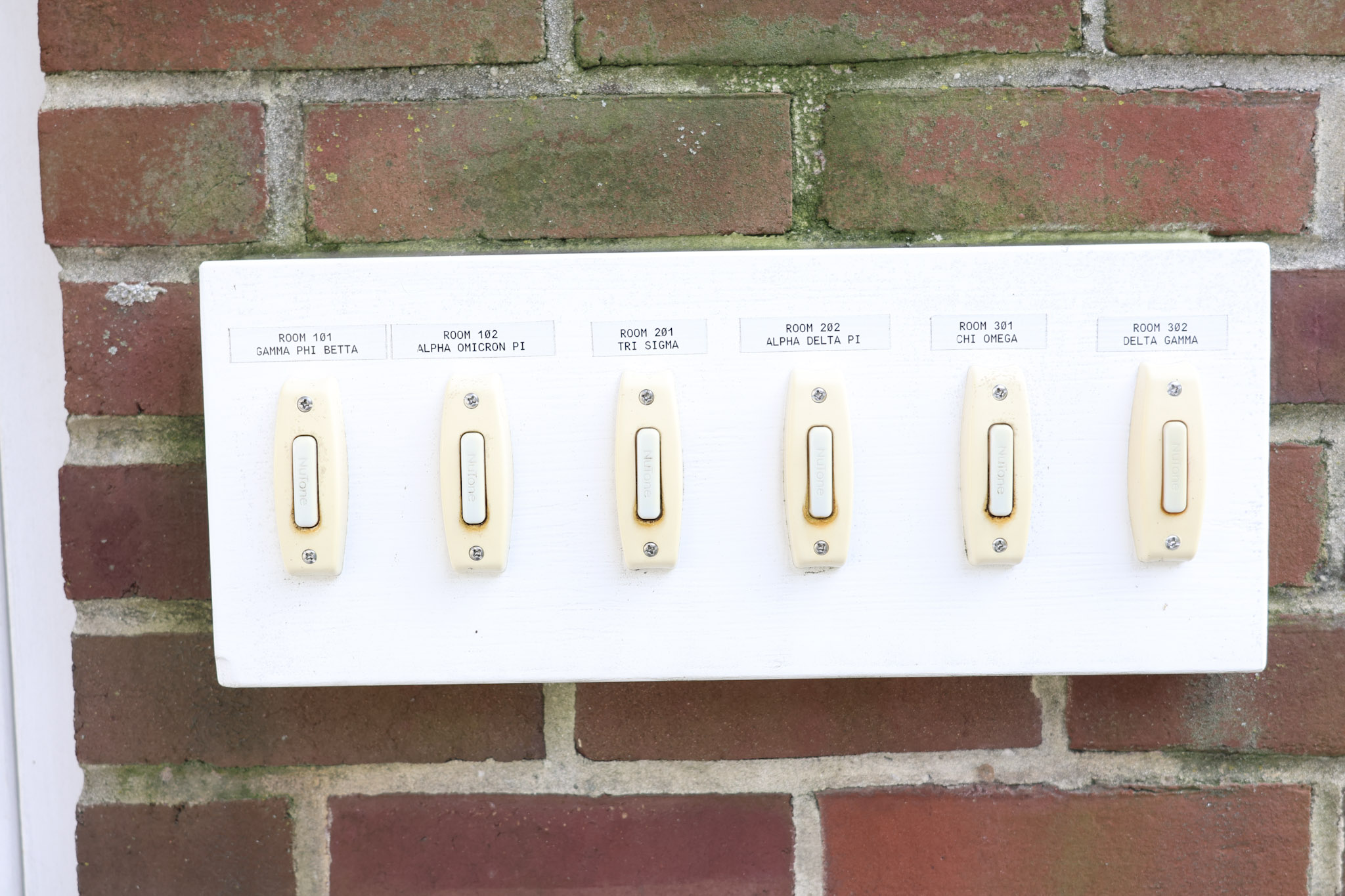
(By Starlynn Decker/The Gettysburgian)


