
By John McDermott, Staff Writer
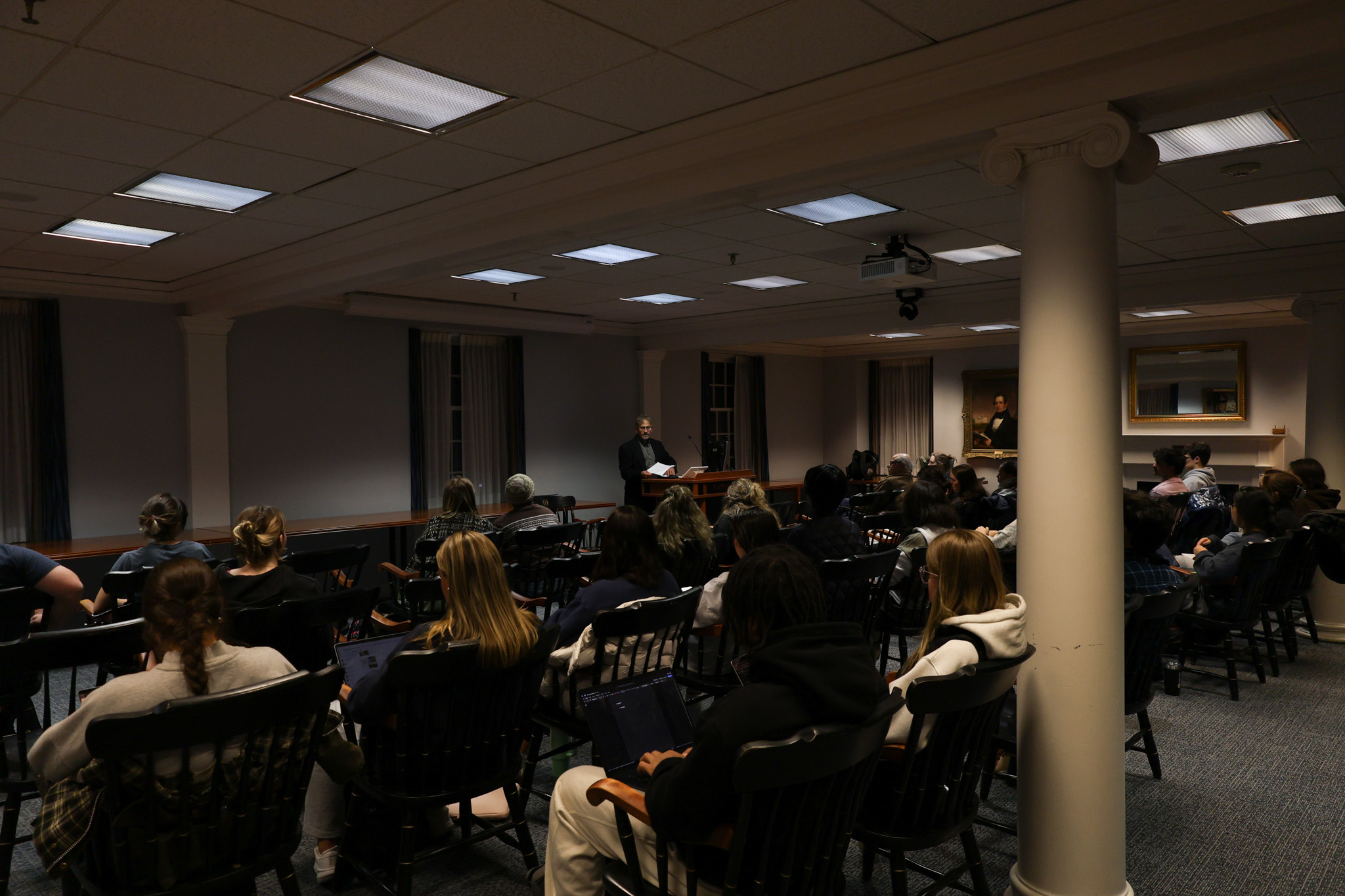
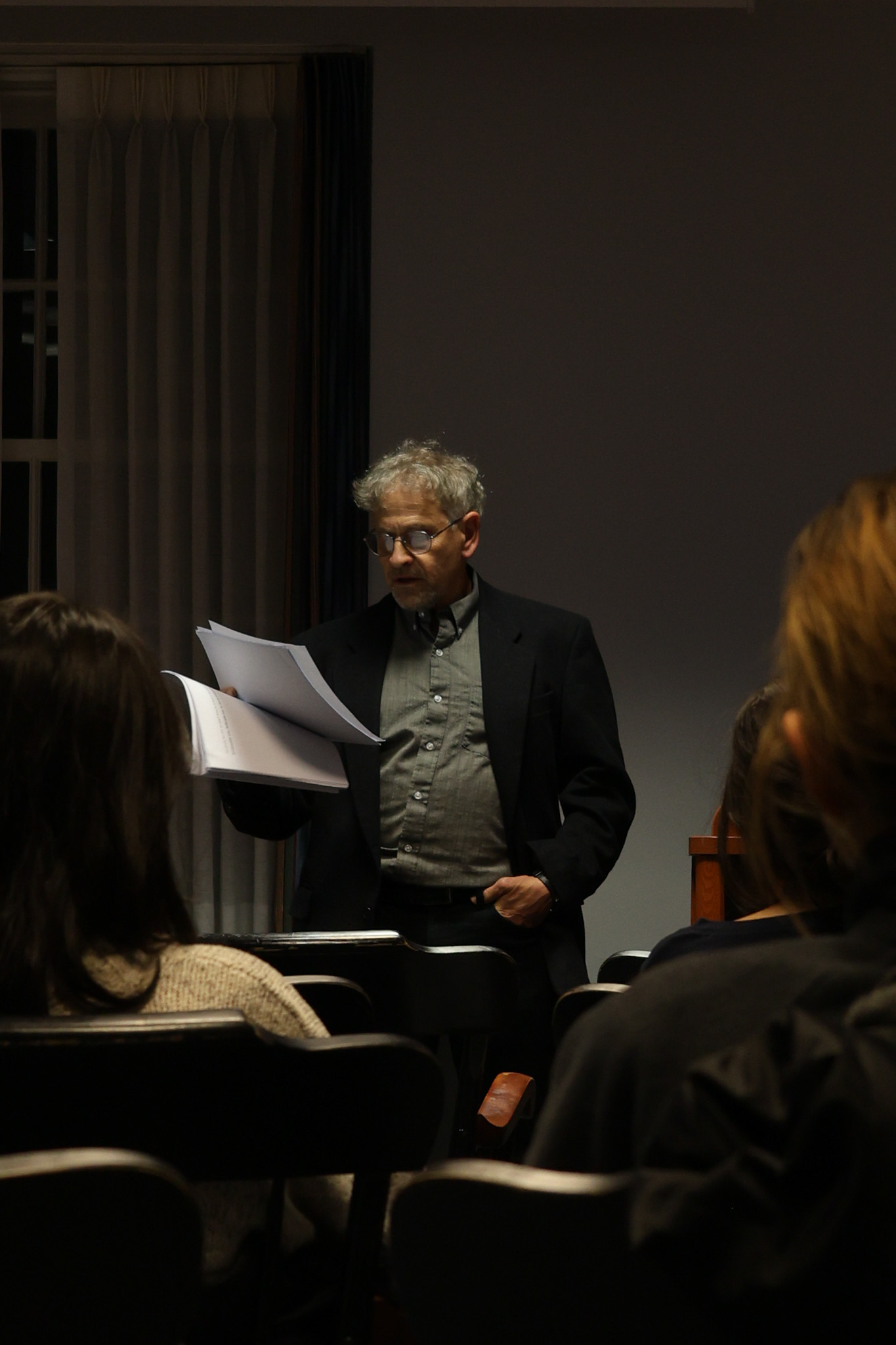
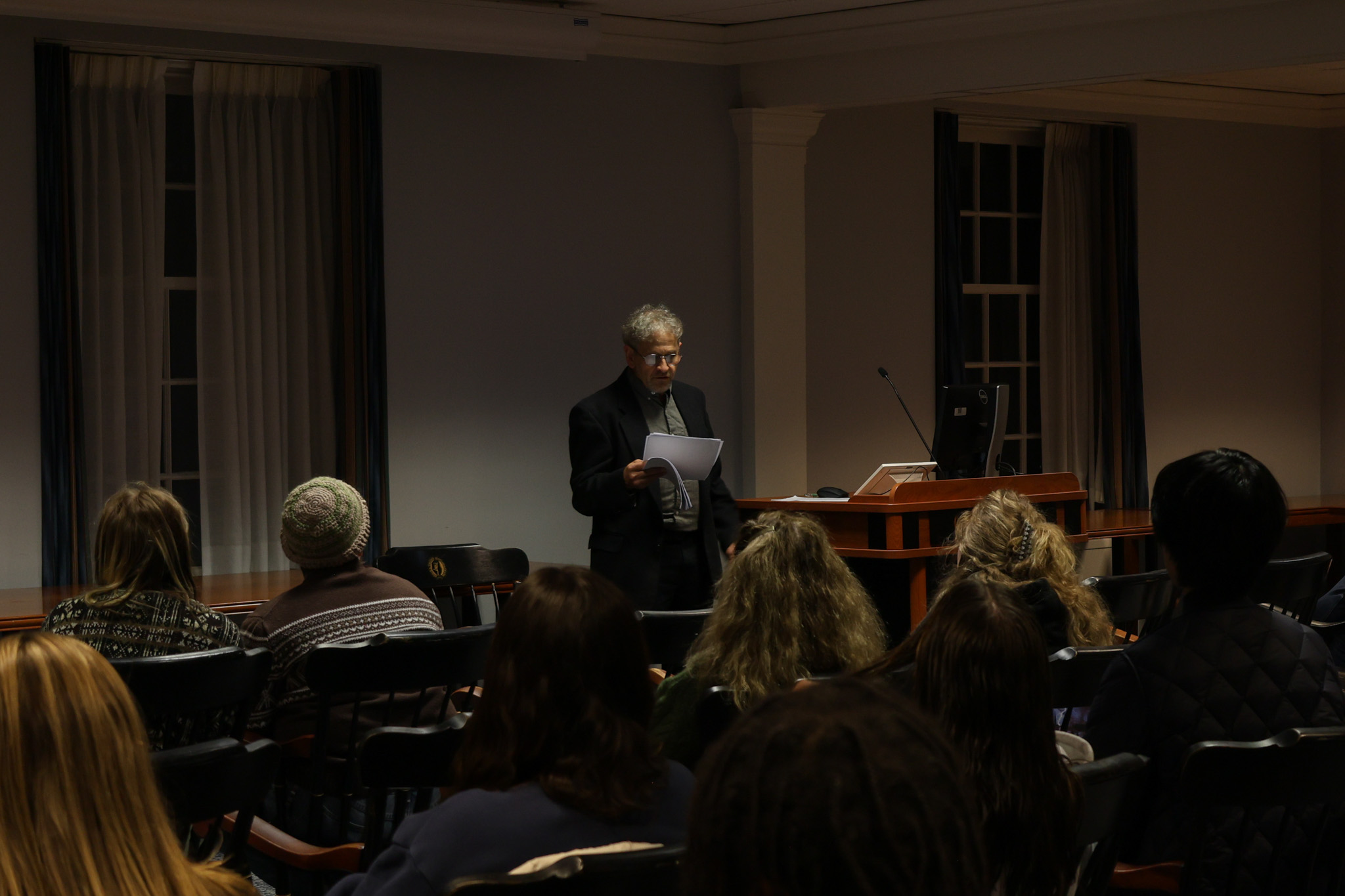
On Monday Nov. 9, the English Department, the Writing House, and EPACC hosted a reading and conversation with award-winning author David Galef in the Penn Hall Lyceum at 7 p.m. Galef has written 20 books, including 3 novels, as well as many short stories, poems, and essays that have appeared in major magazines and newspapers such as the New York Times. He is currently an English professor at Montclair State University and the editor-in-chief of Vestal Review, the world’s longest-running flash fiction magazine.
Galef’s first story, “Trade Offs” followed a girl named Jasmine as she traded toys with other kids before navigating hardships in her life. Her mother became a heavy drinker, her father left for another woman, she experienced a teenage pregnancy which she terminated, worked dead-end jobs, and went through her own unsuccessful marriage before meeting and falling in love with a woman named Molly and raising a son with her, only to lose Molly to cancer and experience her own health issues and spend her final days in rehab and a nursing home following multiple strokes. Jasmine learns from a college professor that “what something’s worth is what you’re willing to give up for it,” and Molly had once told her that “life is full of trade-offs until there is nothing left to trade.”
His second story, “Second Act” is about a boy named Ignacio whose parents performed in a circus, a lifestyle he did not embrace at first. He left the circus for college and built his own life and family working in finance. When he is with his son however, the playful side he was raised with comes out and he realizes that it was okay to not take everything seriously like he did when he was younger.
His third story, “Disappearing Act” is about a man named Steven who had the ability to make everything he disliked disappear. He never made people disappear because he saw good in everyone. However, he realized he was making decent things disappear and he started to resent himself as an “irredeemably petty, dislikable man” and he decided to disappear.
(By Grace Jurchak/The Gettysburgian)
His fourth story, “Face” is about a man named Alex who is looking in the mirror one morning reminiscing about a date night ten years earlier and how exciting it was, wondering if he could’ve had a future with his date while feeling flattered and proud that he was once seen as attractive.
His fifth story, “Eddie Ate my Spaghetti” is about a former school bully named Eddie who ends up homeless and poor but is found by an old classmate who recognized him, took him to a diner, but forced him to eat more than he could, getting revenge for all the times Eddie would take other kids’ food and eat it when he wasn’t even hungry.
His sixth story, “Visiting the Bastards” is about a husband and wife who have a daughter who left home and had not spoken to them in a long time. They go to visit with their old family friends the Bastards, who had a daughter around the same age as theirs, but acted rude toward them their last visit. The Bastards’ daughter asked them where their daughter was and made a remark that offended the husband enough for him and his wife to leave the gathering.
His last story, “Selfish” is about someone who marries themself and realizes that all relationships will have disagreements and rough patches, and that it is impossible to have a perfect relationship, even when it seems like it is.
(By Grace Jurchak/The Gettysburgian)
Galef then gave advice on writing to the students in the audience, detailing his editing process where he emphasizes economy with his creativity: “I try to cut obvious verbiage … I try to take three actions and turn them into one … I want good imagery.”
He also explains how he finds ways to extract greater meaning out of mundane moments in his stories, mentioning how “it’s not that hard to write a thrilling story about a superhero because their lives are by definition thrilling,” but putting “ordinary people in weird situations brings something out in them. If you have characters that aren’t doing too much, stress them because that’s where character comes out.”
(By Grace Jurchak/The Gettysburgian)
He also believes in letting the characters frame a story rather than the language, encouraging readers to “invest in mini scenes. Don’t say they had a long and unhappy marriage, give me that one poisonous line of dialogue from the kitchen,” as he explained how to use the “show-don’t-tell” approach to writing fiction.


