
New majors, minor garner excitement among campus community
By Rose Fogliano, Contributing Writer
A new year brings new majors, minors and academic prospects to Gettysburg students.
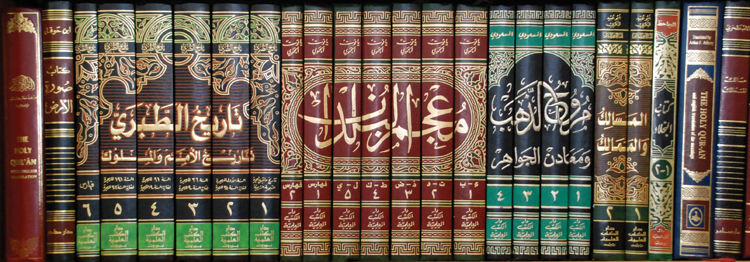
A minor in Middle East and Islamic Studies is new to the College’s offerings this year (Photo courtesy of GCC&M).
This year, students have opportunities to major in Mathematical Economics, earn a Bachelor of Science in Computer Science or minor in Middle East and Islamic Studies (MEIS).
Each new program has already garnered significant student interest and faculty support.
The Mathematical Economics major has generated much excitement with 13 students currently declared, according to Academic Administrative Assistant Sue Holz. Both the B.S. in Computer Science and the MEIS minor have also elicited noteworthy levels of student interest.
The Mathematical Economics major is mainly of benefit to students who plan to apply for Ph.D programs, but is also an option for students who like math and are interested in its applications to economics, according to economics professor and Department Chairperson Charles Weise.
Examples of the relationship between mathematics and economics are pervasive in the modern world, so gaining a greater understanding of mathematics essentially allows students to become even more engaged with economics.
Students of mathematical economics can use differential equations and partial derivatives to understand market equilibrium in the New Keynesian Model, multivariable calculus to model how changes in price affect demand, and linear algebra to estimate how various variables affect certain economic phenomena.
“Economics as it is practiced by academics is a very mathematical field,” said Weise. “When we teach economics to undergraduates we usually take out most of the math and present concepts at a graphical or intuitive level.
“The major is designed to give economics students who are mathematically inclined the mathematical tools they need to explore advanced topics in economics at a more mathematically sophisticated level.”
Weise also believes that the new major will help students who wish to get jobs in finance or other related fields that require an immense understanding of mathematics.
In the Computer Science department, students now have the option of adding a Bachelor of Science. While Computer Science has existed as a major on campus since the 1980s, only a Bachelor of Arts has been available up until now.
According to Computer Science chairperson and associate professor Todd Neller, the new major is based on the same core requirements as the B.A., but includes a greater emphasis on science, technology, engineering and mathematics material with the added necessity of taking four additional science courses to complete the major.
“Potential employers and graduate programs often [hold] a Computer Science Bachelor of Science degree in higher esteem than a Bachelor of Arts degree,” said Computer Science Professor Clif Presser.
Neller also agreed that “the primary expected outcome [of the Bachelor of Science] is improved industry esteem of Gettysburg College Computer Science graduates,” adding that both the B.A. and B.S. programs meet the global curricular standards for an accredited Computer Science degree.
“Both degrees open many excellent doors to high-satisfaction, high-compensation careers beyond Gettysburg,” Neller said.
This year’s final addition to Gettysburg’s aca-demic programs is a new minor for the Interdisciplinary Studies department. MEIS (Middle East and Islamic Studies) was made possible by a $532,000 grant from The Andrew W. Mellon Foundation and the enthusiasm of faculty and students alike.
The requirements for the minor are proficiency in Arabic (to the 102 level) or another Middle Eastern language and six electives chosen from a range of courses spanning the Arabic, Anthropology, Film Studies, History, Politics, Religion and Interdisciplinary Studies departments.
Internships and study abroad opportunities enhance students’ curricular understanding.
Many of the professors involved agree that learning about an unfamiliar region and culture is an essential part of a liberal arts education and that Islam is often misunderstood by American students.
“Middle East Studies allows us to interrogate our assumptions about those who live in the greater Middle East region, their cultures and languages, their histories, their identities, how they experience the world in which they live, and a host of other topics,” said Anthropology Professor Amy Young Evrard.
“On a more personal level, I find MEIS fascinating and fun.”
The MEIS minor is open to students of any major, and interest stems from students across a wide range of academic pursuits.
A full list of majors and minors is available on the college website.


